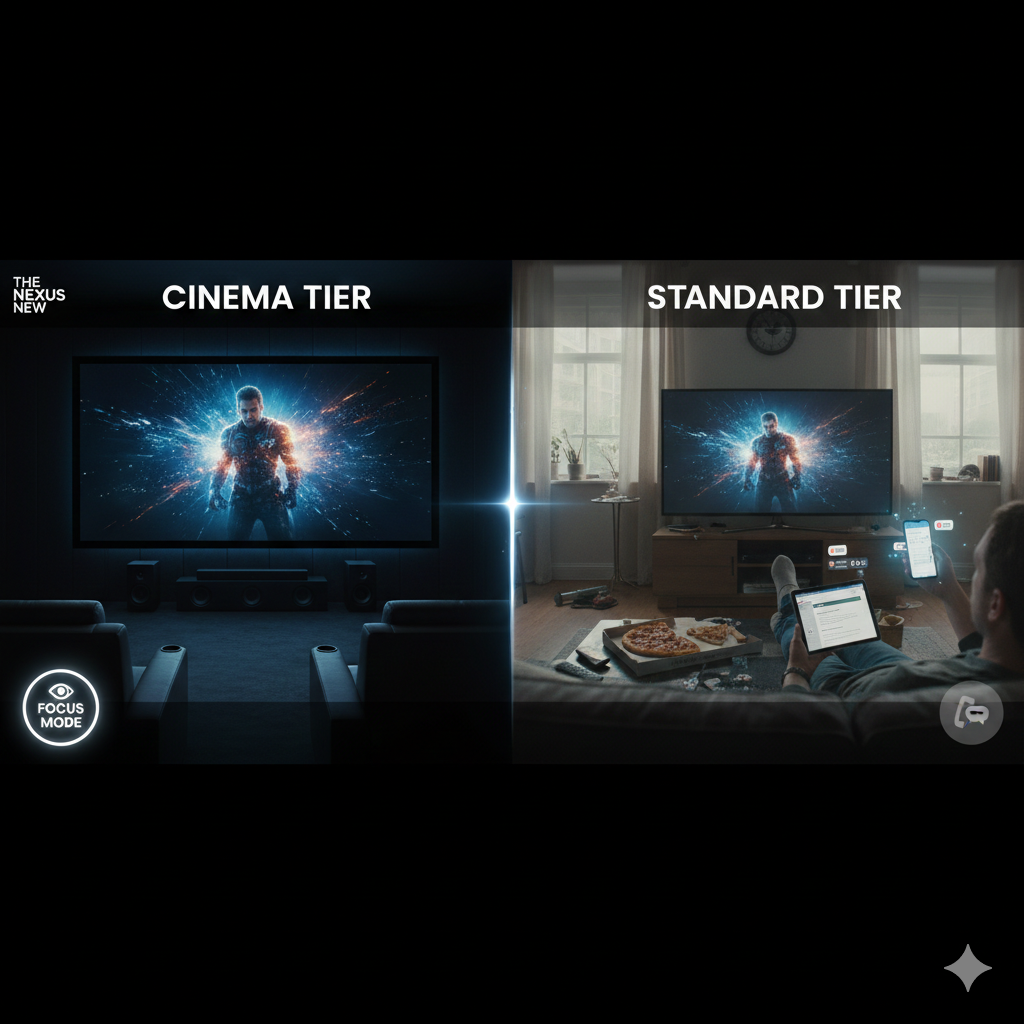

The “distracted viewing” debate has officially moved from the press junket to the boardroom. Just days after Matt Damon’s viral comments regarding movies becoming “wallpaper,” industry leaks suggest that Netflix is preparing a radical—and controversial—new subscription level: The Cinema Tier.
According to internal reports leaked this morning, the streaming giant is testing a “Theater Mode” specifically designed to combat the very “background noise” culture that Damon criticized. But there’s a catch—it might cost you an extra $5 a month.
What is ‘Theater Mode’?
The rumored “Cinema Tier” isn’t just about removing ads; it’s about a technical overhaul of the viewing experience. Sources suggest this tier would include:
- Ultra-High Bitrates: Bypassing the standard compression to deliver a file quality that rivals physical 4K Blu-rays.
- The “No-Phone” Interaction: A software feature that disables second-screen “pop-ups” and notification syncing with the Netflix app to encourage focused watching.
- Exclusive Audio Mixes: Access to IMAX Enhanced and advanced Dolby Atmos tracks previously reserved for theatrical releases.
The ‘Matt Damon’ Effect
This move appears to be a direct response to the growing backlash from filmmakers and actors who argue that streaming services have devalued the art of cinema by optimizing for “second-screen” viewing.
As we noted in our coverage of Damon’s remarks, the industry is at a breaking point. Netflix’s strategy seems to be: if people want to treat movies like “art” rather than “wallpaper,” they should be willing to pay a premium for the privilege.
The Nexus Take: A Dangerous Precedent?
At The Nexus New, we have to ask: Should high-quality art be a luxury feature?
By locking the best bitrates and “focus features” behind a higher paywall, Netflix risks creating a two-class system of culture. On one side, you have the “Premium Cinephiles” who experience a film as the director intended. On the other, the “Standard Users” receive a compressed, distracted version of the same story.
If this rumor proves true, Netflix is effectively placing a tax on “Active Viewing.” It’s a bold gamble that assumes the audience values their focus as much as their content.
