
In the ever-evolving landscape of medical dramas, The Pitt on Max has carved out a niche by blending high-stakes ER action with thought-provoking social commentary. Season 2, which premiered on January 8, 2026, takes this to new heights with a storyline that dives headfirst into the controversial world of artificial intelligence (AI) in healthcare. Showrunner R. Scott Gemmill isn’t just delivering pulse-pounding emergencies; he’s challenging viewers to question whether machines can truly enhance—or potentially undermine—the human touch in medicine.
The Central Characters and Their Clash
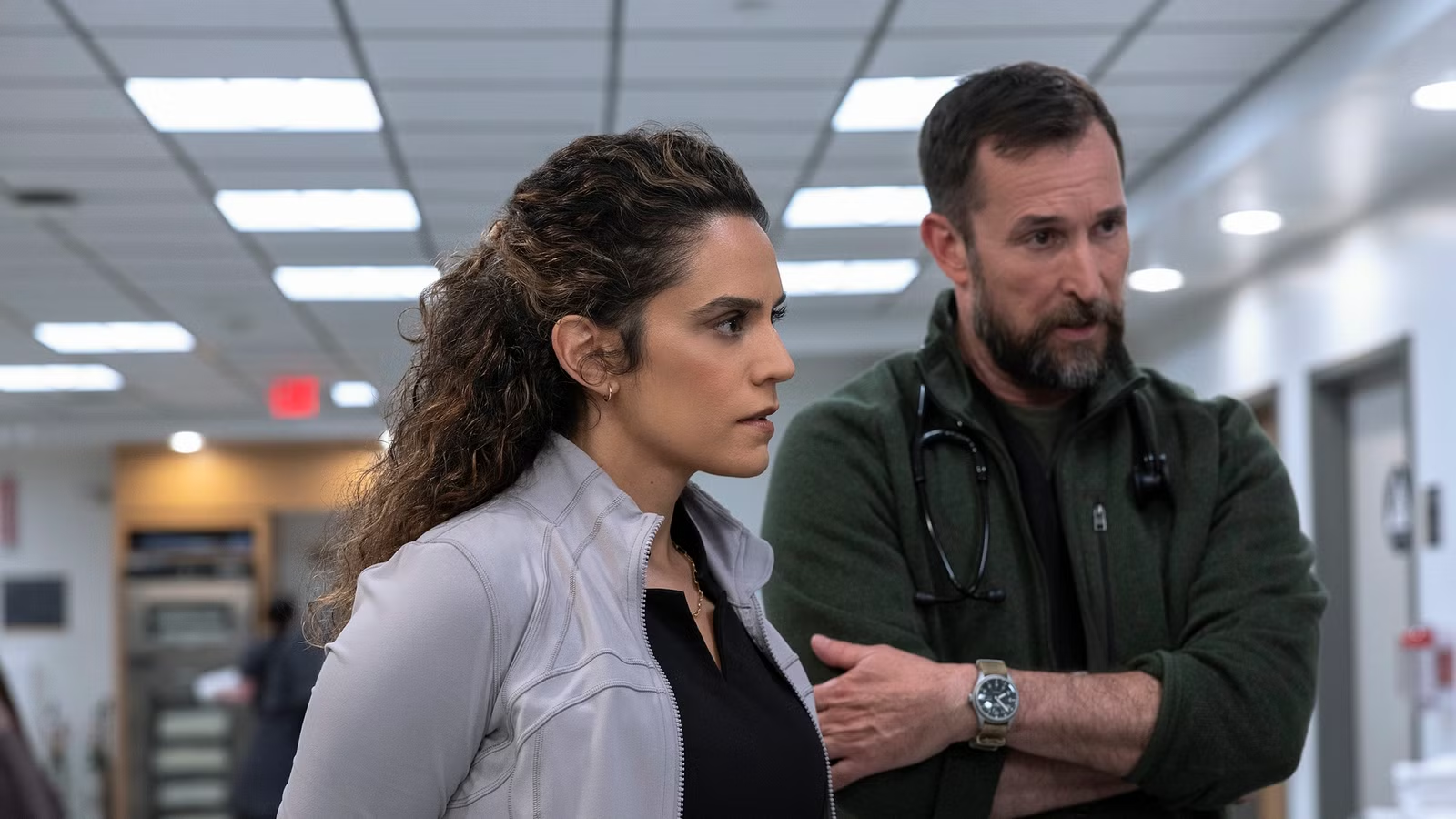
At the heart of the season is Dr. Michael “Robby” Robinavitch, played by recent Golden Globe winner Noah Wyle, who’s gearing up for a three-month sabbatical. Enter his interim replacement, Dr. Baran Al-Hashimi (Sepideh Moafi), a forward-thinking physician whose reliance on AI tools creates immediate friction.
This clash isn’t just character drama—it’s a mirror to ongoing debates in the real medical field. To understand the friction at Studio 8H’s fictional counterpart, here is how the two leads stack up:
| Philosophy Component | Dr. Robby (The Old Guard) | Dr. Baran (The Tech Modernist) |
|---|---|---|
| Primary Diagnostic Tool | “The Gut” (Clinical Intuition) | Generative AI & Predictive Algorithms |
| View on Charting | Narrative-focused, manual entry | Automated AI ambient transcription |
| Patient Interaction | Focused on “unspoken anxiety” | Guided by data and “Patient Passports” |
| The Risk | Human fatigue & systemic delays | Tech “hallucinations” & privacy breaches |
Robby embodies the legacy approach: relying on empathy and years of hands-on experience. In contrast, Dr. Baran champions data-driven efficiency, using AI for everything from symptom analysis to automated charting.
Read Also: The Pitt Season 2 Episode 2 Recap: AI Errors and Robby’s Secret Romance
Highlighting AI’s Strengths and Flaws
Take Episode 2, titled “8 A.M.” (aired January 15), as a prime example. Dr. Baran demonstrates her tech-savvy style by recording patient consultations via a secure ambient-listening app. She touts AI’s 98% accuracy rate, which she claims can reduce charting time by 80%, allowing doctors to spend 20% more time with patients.
However, the “2% error margin” proves dangerous: in a pivotal scene, the AI misinterprets a medication name, documenting a similar-sounding drug in a patient’s chart. This highlights the core tension: AI can crunch data at lightning speed, but it lacks the subtle observational skills—like noticing a patient’s atypical reaction—that humans bring to the bedside.
Building on Previous Themes
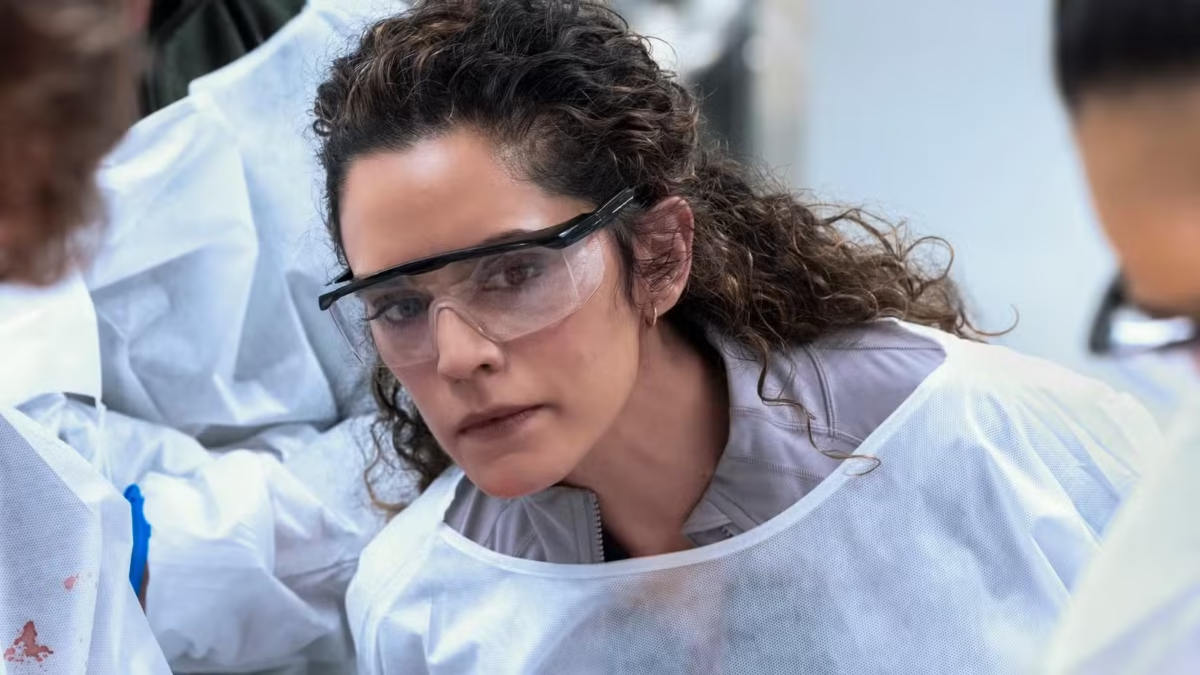
The storyline builds on themes from Season 1, where Robby famously clashed with a parent swayed by “Dr. Google.” Now, with generative AI in the mix, the show probes deeper questions: Can algorithms truly account for the uniqueness of each patient? Dr. Baran’s “by-the-book” method, bolstered by algorithms for diagnosing illnesses, constanty clashes with Robby’s willingness to bend rules based on compassion—approaches that have saved lives in unconventional ways.
The Polarizing Impact of AI
This AI integration is what makes the plot so polarizing. On one side, it represents progress: shorter wait times and less burnout for overworked staff. In a field where human error is inevitable, AI could serve as a reliable safety net. Yet, critics argue it diminishes the “art” of medicine. The ethical dilemmas are front and center—issues like patient privacy in recordings and the question of accountability when an algorithm falters. As Robby points out, sometimes empathy and quick thinking are what turn the tide, not a cloud-based summary.
A Grounded Perspective on Technology
What sets The Pitt apart is its grounded take on AI. Unlike sci-fi tropes, the show focuses on practical applications, making the debate accessible and timely. With Tracy Ifeachor returning as Dr. Heather Collins, the ensemble cast brings these conflicts to life in a drama that doesn’t shy away from complexity.
Sparking Broader Conversations
Ultimately, this arc proves The Pitt is more than just another hospital show—it’s a catalyst for conversation. In an era where AI is infiltrating every industry, the series reminds us that technology’s value lies in augmentation, not replacement. Whether you’re team Robby or team Baran, one thing’s clear: the future of medicine might be digital, but the human element remains irreplaceable.
Inspired by insights from MovieWeb‘s coverage.
