

As fans prepare to return to Westeros in HBO’s A Knight of the Seven Kingdoms, they will find a world that looks very different from the one in Game of Thrones or House of the Dragon. There are no dragons in the sky, and the Iron Throne is held by “Daeron the Good.”
However, beneath the surface of this “peaceful” era lies a bitter, lingering resentment from a civil war that almost tore the realm apart just a decade prior: The First Blackfyre Rebellion. To understand the world of Dunk and Egg, you must understand the war of the “Red and Black.”
The Seeds of Rebellion: Aegon the Unworthy
The conflict began with King Aegon IV, widely regarded as the worst king in Westerosi history. Known for his gluttony and lust, Aegon fathered numerous illegitimate children. On his deathbed in 184 AC, he committed an act of pure chaos: he legitimized all of his bastards.
Among these were the “Great Bastards,” children born to noble mothers who possessed the charisma and martial skill that Aegon’s trueborn heir, Daeron, supposedly lacked.
The King Who Bore the Sword
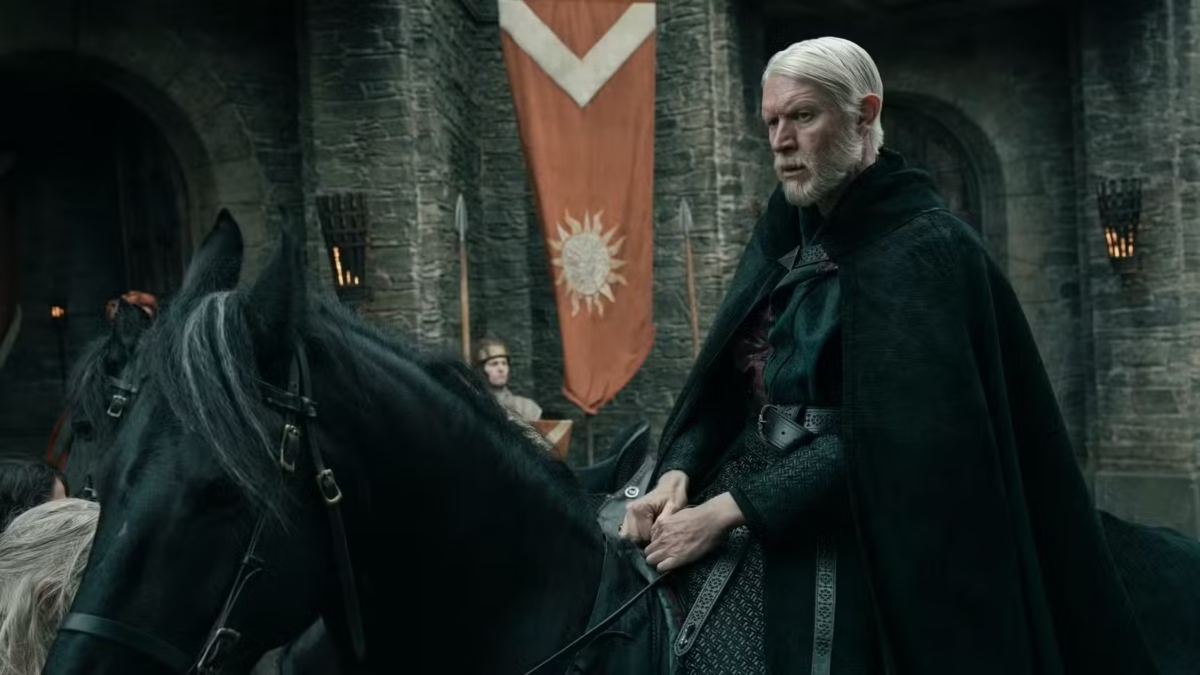
The face of the rebellion was Daemon Blackfyre. Tall, powerful, and a legendary warrior, Daemon was the son of Aegon IV and his cousin Daena the Defiant.
Crucially, Aegon IV gave Daemon Blackfyre—the Valyrian steel sword of Aegon the Conqueror. In a feudal society like Westeros, many saw the gift of the sword as a sign that Aegon intended for Daemon, not Daeron, to be his true successor. While Daeron II was a scholar and a diplomat who brought Dorne into the realm through marriage, the “warrior lords” of Westeros preferred the martial prowess of Daemon.
The Battle of Redgrass Field
The tension exploded into open war in 196 AC. The realm split: those who supported the “Red Dragon” (Targaryen) and those who supported the “Black Dragon” (Blackfyre).
The war culminated at the Battle of Redgrass Field. It was a bloodbath that saw:
- The Raven’s Teeth: Brynden Rivers (Bloodraven), a loyalist Great Bastard and sorcerer, used his elite archers to rain arrows down on Daemon Blackfyre, killing him and his twin sons.
- The Hammer and the Anvil: The rebellion was finally crushed when Prince Baelor “Breakspear” and his brother Maekar (who you will meet in the show) arrived with reinforcements, trapping the rebel army.
While the rebellion split the realm in two, the real impact was felt in the rise of Brynden Rivers, whose secret maneuvers would eventually dictate the future of House Targaryen for centuries to come.
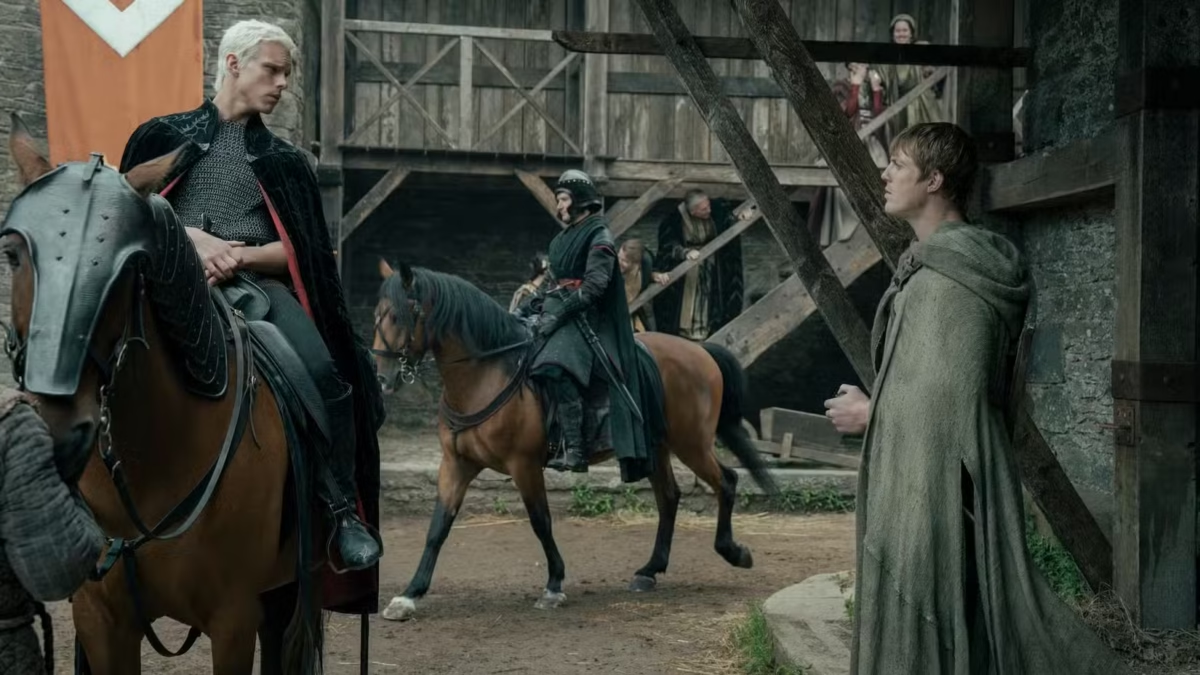
Why It Matters for ‘A Knight of the Seven Kingdoms’
Though the war ended 13 years before the start of the series, its scars are everywhere:
- A Divided Realm: In A Knight of the Seven Kingdoms, you will see lords who still harbor “Black” sympathies. The question “Which dragon did you support?” is a dangerous one that can lead to a duel at any moment.
- The Exile Threat: Bittersteel, another Great Bastard, fled across the Narrow Sea with Daemon’s remaining sons and the sword Blackfyre. They formed the Golden Company, waiting for the right moment to return.
- Bloodraven’s Spies: The king’s Hand, Brynden Rivers, has spies everywhere. The atmosphere of the show is one of paranoia—anyone could be a secret Blackfyre supporter, and anyone could be a spy for the Crown.
While House of the Dragon is about the death of dragons, A Knight of the Seven Kingdoms is about the death of trust. As Dunk and Egg travel the Reach, they aren’t just fighting for honor; they are navigating the fallout of a family feud that refuses to die.
