

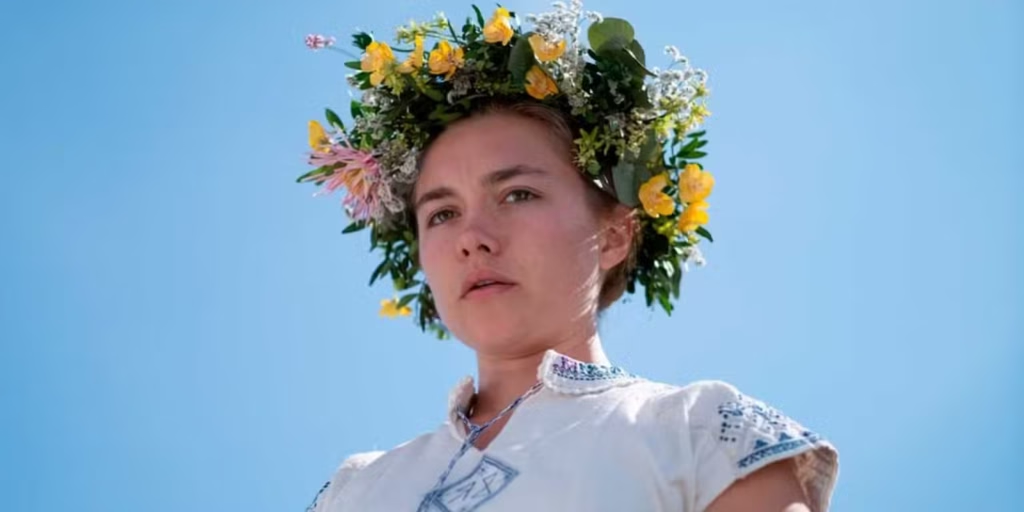
Ari Aster’s Midsommar is widely regarded as a modern masterpiece of folk horror, famous for its bone-chilling ritual sacrifices and the blindingly bright, sun-drenched terror of a Swedish commune. However, during a recent interview with A24 and Letterboxd for “The List,” legendary host Conan O’Brien revealed a very different reason for being stressed out by the film. While most audiences are haunted by the “Attestupan” cliff scene or the grizzly bear finale, O’Brien found himself fixated on a much more relatable domestic issue: the lack of actual food on the dinner tables. Coming from a large family, O’Brien joked that seeing a giant feast table covered with only a few hazelnuts and grapes was enough to make him “start killing people.”
The Scarcity of Food as a Subversive Horror Tactic
At first glance, O’Brien’s comment sounds like a classic bit of observational comedy, but it actually highlights a brilliant piece of production design by Ari Aster. In most folk-horror traditions, a “feast” is supposed to represent abundance, fertility, and the rewards of the harvest. By presenting massive, beautifully carved tables that are largely empty, Aster creates an immediate, subconscious feeling that something is “off.” This scarcity contrasts sharply with the epic, colorful scale of the Hårga’s rituals, such as the Maypole dance. It suggests that despite their smiles and white robes, the commune is fundamentally hollow or perhaps withholding something vital from their guests. O’Brien’s instinctual “upset” at the lack of calories is actually a sign that the film’s atmosphere of unease was working exactly as intended.
Why O’Brien’s Relatable Humor Boosts the Film’s Legacy
Hearing an icon like Conan O’Brien discuss Midsommar years after its release proves just how much of a cultural footprint the movie still has in 2026. O’Brien’s ability to find humor in the “stress” of a sparse family meal makes the film’s avant-garde horror feel more grounded. For many viewers, the most effective horror isn’t always the supernatural or the violent; it’s the violation of social norms and basic hospitality. By pointing out the meager servings at the Hårga tables, O’Brien has inadvertently given fans a new way to analyze Aster’s work. It reminds us that every detail in a film—even the amount of food on a plate—is a deliberate choice designed to keep the audience in a state of constant, low-level anxiety.
